


Are you new to firearms and looking to purchase your first pistol? Not sure which pistol to purchase? Have you received endless recommendations, but still are not sure where to start? We talk through several aspects to consider in your endeavor to find the right pistol in this how to choose your first pistol post.
While I will mainly be focused on those just getting started, we cover some tips and guidance for anyone looking for their next pistol. I do not cover every aspect or all of the technical details, as it is my assumption and hope that you will take it upon yourself to learn more on your own. Nonetheless, we provide enough here to get you started.
Points for Consideration
Intended Use
General quality and reliability of a pistol are desired regardless of the purpose for having one. Other qualities become equally important depending on a firearm’s ultimate intended use. What purpose do you have for a pistol? Here is a list of intended purposes and the associated qualities you should be prioritizing.
| Intended Use | Qualities for Consideration |
| Recreational Target Shooting | Accuracy |
| Competition | Accuracy, Capacity, Reliability, Speed |
| Hunting | Accuracy, Effectiveness, Reliability |
| Carrying for Self-Defense | Accuracy, Capacity, Concealability, Effectiveness, Reliability |
| Home Defense | Accuracy, Capacity, Effectiveness, Reliability |
Prior Experience
Have you shot a pistol before? What do you remember about the experience? Do you remember the caliber or what the felt recoil was like? Being able to think back to any experience can help inform your decisions now. Things that stand out about any shooting experience, good or bad, can help guide and inform current efforts in making a good choose now.
Research and Reviews
With the plethora of ratings and reviews for everything on the internet today, firearms are no exception. You can find reviews for just about every gun available. As you receive recommendations or start narrowing down choices, be sure to include ratings and reviews in your research so you are better informed. Look for the consistencies in feedback, good or bad, across the resources you review.
Recommendations
Opinions can be like armpits (and other things that start with “A”). They can stink.
If you are like a lot of folks, you probably have gotten at least a handful of recommendations from others you know who already have one or more pistols. (Someone that does not shoot or does not own any pistols should not be considered a credible source.)
Recommendations can be a good place to start. However, just know that if you ask ten different people their opinions on what they think you should buy, you will likely get eight or more different opinions. And those recommendations may still not be best for your needs. Where does that leave you? Still wondering.
And if you are a woman, you likely have gotten all sorts of input and advice from your guy friends and those gun shop sales people. Ask around enough, and I bet you will eventually be told you just need to start with a revolver. Of course, there is nothing wrong with a revolver and they can be a great option; but is it the right pistol for you? How do you know?
My point? Collect recommendations but still do your own homework and try to shoot as many things as possible before making any decision.
Budget
It is safe to say with firearms that you get what you pay for, like so many things. Cheap means giving up features and/or overall quality, while on the flip side, a super expensive pistol is not necessarily needed, unless you just have money burning a hole in your pocket. And yes, I also realize that what may seem cheap or expensive to me may differ from what is for you.
What can you expect to spend these days? You can get something for as little as $200 – $300. However, for something a bit better, I would suggest you plan to spend $400 – $800; and it does not necessarily have to go to the upper end of that range either if you do your homework and shop around. Of course, pricing for pistols can go up considerably from there ($1,100 – $3,500+), with name recognition, quality, function, and features.
Why is budget last in this list, when it may be a primary consideration for you? While budget is important, I argue most of the other factors are more important when finding the right pistol. If you are primarily concerned with budget alone, you may miss out on one or more of the other key factors (mentioned above) that make a certain pistol a better choice for your wants and needs. Plus, you can always save up for a little bit longer in order to get a better choice.
Top Six Pistol Characteristics that Matter
Handgun Size
Today, there is a range of pistol sizes, everything from full-size to micro for semi-automatics and larger frame to small, light weight frames for revolvers. Some of the pros of smaller pistols is concealability while the cons are reduced ammo capacity and potentially reduced accuracy. Additionally, smaller handguns, while more concealable, mean more felt recoil. All points to consider depending on the purpose of the pistol you are looking for.
Basic Operation
Regardless of the pistol type you are considering, can you operate it effectively and without issue? This is especially important if you plan on using one for self- or home defense.
Sometimes ‘racking’ the slide of some semi-automatics can be an issue for those with weak hands or arthritis, for example. Are you capable or willing to learn how to operate a pistol whether it is a semi-automatic or revolver? An important consideration.
To be fair, if you work at it enough, things can become easier in time; but the operation of a handgun is still an important consideration from the start.
Grip
How does the grip of a pistol fit in your hand? You won’t know until you at least hold one. Is it mostly comfortable; and can you properly reach the trigger, the magazine release, and the slide release (on a semi-automatic) with minimal manipulation of the firearm while it is in your hand. Can you easily reach the cylinder release of the revolvers you may be considering?
Grip types and size affect how a pistol feels in the hand. A grip that is too ‘fat’ may be too large for your hands, not allowing you to effectively reach the trigger, for example. On the other hand, a very narrow grip, like that of some with single stacked magazines (for some semi-automatics), may not fill your hand enough or cause you to feel more recoil in the webbing of your hand between your thumb and index finger when shooting it, as another example.
Grip Dimensions
While overall width is a key point to consider, the depth of a grip, from front to back, is also an important factor. If a grip is either too wide or too deep, it may prohibit you from getting your index finger onto the trigger properly or your thumb being able to optimally access the magazine release or slide release on a semi-automatic. By the way, any grip should allow you to comfortably reach the trigger with your index finger and get the center part of the first pad of your index finger onto the trigger.
The height of a grip also matters, especially if you have larger hands. Those shorter grips on sub-compacts and below easily facilitate your palm getting pinched with the insertion of a magazine. Additionally, many folks feel they just cannot get a solid grip on smaller pistols with those shorter grips. If you cannot get a solid grip then recoil management also becomes more of an issue.
Texture
Grip texture is another factor to consider. Some pistols have a much more aggressive grip texture than others in order to prevent loss of pistol control in wet conditions, such as rain, sweat, or blood. These more aggressive textures may be perceived as too rough for some. Again, grip texture is a important consideration, especially if a pistol is intended for defensive or even hunting purposes.
Sights
Most every pistol, aside from those with added features, come with iron sights. Are they the right option for your personal needs and the purpose of the pistol you are purchasing? Can you at least upgrade the sights on a pistol you may be considering?
If you are buying for self- or home defense, you will want to consider night sights, those that glow or illuminate in the dark; and specifically, you may want to consider sights that have a larger glowing or illuminated front site. Many pistols offer night sights or those that illuminate after dark when charged in light first.
If you are target or competitively going to shoot or even hunt, you likely want to consider whether the iron sights on a pistol are adjustable, i.e. windage (left/right) and elevation (up/down). After all, you need to be as accurate as possible in these cases.
If you have worsening eye sight, consider a red dot. Or if you are just generally looking to improve your shooting overall, you should consider a red dot. This is true whether target shooting, competition, hunting, or self-/home defense. Red dot sights not only offer an improved shooting experience for those with declining vision, they offer faster target acquisition and follow-up shots for anyone using them. You’ll just need to find models that offer a cut-out in a semi-auto’s slide or a means to mount one to a revolver’s frame (or plan to have your pistol cut for a red dot sight). And yes, these sights offer adjustability too.
Trigger
The operation of a trigger is an important consideration in choosing a pistol. You will hear terms such as pull, take-up, and reset. You are also likely to hear or experience such concepts as a trigger being crisp, heavy, mushy, gritty, sloppy, or some combination thereof.
Triggers vary between firearms; and are definitely a personal preference. Things like having a heavy pull, a short take-up, or having a short or quick reset can be important as well, all dependent on the intended use of a pistol. For example, I tend to like a short take-up with a very quick or short reset with an overall smooth, crisp pull for my defensive pistols.
Sidebar note: Keep in mind that some shops do not allow you to test trigger pulls as they keep trigger locks on their firearms. This is not optimal for those shopping who know what they are looking for.
Caliber
Balancing an effective caliber versus being able to effectively manage recoil is an important consideration. The smaller the caliber the less felt recoil, whereas the opposite is true for larger calibers. Choosing the right caliber is critical for the intended purpose of the pistol. Ease of slide operation can vary with calibers as well, with larger calibers having larger recoil springs making some slides stiffer or harder to manipulate for some.
While 9MM is a great caliber to start with for self- or home defense, you will likely need to consider something much larger for hunting, for example, depending on what game will be your intended target. And for plinking/basic target shooting only, a .22 is a great caliber to start out with or learn with and grow with as well.
How to Actually Find What’s Best (Better) for You
Rentals or Friends’ and Family’s First
How do you really find what works for you and what you really like best (based on the criteria above), after the research and shopping around? Go shoot!
I tell folks all the time the best way to find the right handgun for them is to go shoot as many as possible before they buy. Sure, if I sold firearms, I may sell less initially with this advice; but hopefully after you shoot and find what you really like, you appreciate the advice I gave you and come back to buy from me.
Family or Friends
If you have friends or family members willing to let you shoot what they have, then go shoot with them and try their different pistols.
Rentals
Most gun shops offer rentals where you can usually shoot more than one thing during a given session. All you have to do is buy the ammo from that shop. So for example, if you are looking for a 9MM semi-automatic pistol, then rent one, go put 5-10 rounds through it and then come back and ask to try the next 9MM the shop has available for rent. This is a great way to try multiple of the same caliber (or even multiple calibers) and types, i.e. semi-automatic hammer fired or striker or even revolvers, of handguns.
Yes. I believe trying before you buy, assuming you have the ability, is the best option when it comes to purchasing a pistol.
Just ‘Cause
With all that said, if you’ve received a recommendation that you think you want to act upon, there is a pistol you just think is super cool, or there’s a handgun that has received lots of positive reviews and you just want to try it, there is nothing wrong with buying whatever it is you think you want.
There does not have to be much thought or fanfare put into selecting a pistol. It’s actually how I bought my very first handgun! Just know the risks are you may wind up with something you don’t like, something that does not function well, or something you cannot operate effectively.
However, nothing says you cannot buy something else in the future that you like better. Having options and exercising our freedom to choose is the beauty of living in a free world where we can purchase firearms in the first place.
Where to Buy
You have options when it comes to purchasing.
Gun Shops
Today, there are gun shops that are primarily focused on, you guessed it, selling firearms. They may likely be attached to a gun range too, which is very convenient, especially for trying all those rentals.
Large Retailers
There are large box retailers that sell firearms in the mix with everything else they offer. Sometimes you can find deals when they put things on sale; and their staff can be as knowledgeable as any gun shop personnel.
Online Stores
You can also purchase from online gun stores (or dealers). Sometimes you can find great deals at these online retailers.
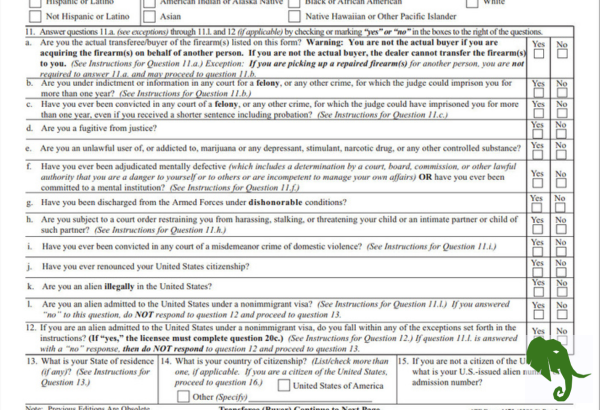
One thing to keep in mind with these online gun shops, is the need to have any firearm you purchase ‘transferred’ to the FFL of your choosing, usually your local gun shop. In other words, firearms cannot just be mailed directly to your home. They must go to an FFL (Federal Firearms Licensee) that you then go to pick up the firearm from. There is usually a FFL transfer fee involved and you still have to complete the necessarily paperwork, i.e. Form 4473, etc.
Firearm Distributors
Finally, there are also firearm distributors who will sell direct to the public. They can sometimes offer a better deal than going to a shop directly. However, just know that there can be a convenience fee involved, as well as tax, and likely shipping. Again, there will also be a FFL transfer fee involved when you go to pick up your firearm form the local shop (FFL) you choose to work with, i.e. to pick up your firearm from. And you still will have to complete a Form 4473, etc. And too, you’ll want to ensure the cost does not wind up being as much or more if you just when to a local gun shop and bought something there.
Other Important Considerations
Buying a firearm is not the end of the considerations or the purchases. The following is a list of things beyond the purchase of a firearm that you should be thinking about and planning for.
Cleaning
Most modern firearms do not need to be cleaned all the time. You can usually get by with shooting several hundred rounds before your firearm needs a bath. Of course, this rule can vary based on how much you shoot, a firearm’s operation, and just how anal retentive you may be.
If you have a new firearm, regardless of what it is, I recommend cleaning it either before you shoot it for the first time or after the first time or two you do. Why? It is a good idea to get all the factory goop (read: crap) off of a firearm sooner than later and instead get your choice of CLP (cleaner, lubricant, and protectant) or oils onto it. Plus, cleaning your weapons is a great way to become more familiar with them, which is always a very good idea.
Storage
Whether a lock box, a gun cabinet, or a gun safe, as a responsible gun owner, you need a way to safely store and lock away your firearms. Make sure you are budgeting for and planning to get something to satisfy this requirement, especially if you have kids at home. Worst case? Use the lock that comes with most firearms today until you can upgrade.
Ultimately consider a safe with fire and flood protection, in addition to who, besides you, may have access to said firearms.
Training and Shooting
Part of me thinks training needs to be required of all gun owners; but the other part of me also prefers there not be anymore government involvement or laws passed requiring anything. I tend to lean to the latter. Just know, that as responsible gun owners, we have a duty to learn and follow gun safety rules and to get the training to make us safe and effective firearms owners. In other words, get some training, especially if you are new or planning to use firearms for defensive purposes. Don’t be like those who buy firearms and do little with them, thinking they already know everything or are safe just because they own one.
In addition, regular shooting at the range is needed. Buying a firearm to look at or lock away for long periods of time is not what you want to do IF you plan on being a proficient and effective shooter. Shooting is a depreciating skill, unlike riding a bike. Regular shooting is key. Can you imagine wanting to shooot competitively and hardly ever shooting? Good luck. Same with having firearms for defensive purposes. You have to shoot regularly.
Plus, who doesn’t want to shoot? Shooting regularly builds skill, releases stress, and allows you to become part of the community. Buying a gun and never working with it does NOT make you safe; and you certainly cannot get good at shooting if you don’t actually… shoot.
Ammo
Plan on buying ammunition if you actually actually plan to shoot the firearm(s) you buy.
You’ll want to consider the type of shooting you plan on whether target shooting, hunting, or self-defense. Each generally requires specific types of ammunition that you need to become familiar with and have available.
Eye and Ear Protection
You will definitely want to obtain both eye and ear protection. First, it’s the safe and right thing to do if you shoot. Secondly, it is required by every gun range you will likely venture to. Be safe. Get the protection you need to shoot safely. Protect those ears and peepers!
Holster
If you have a pistol, you need a holster, especially if you have one for self-defense purposes. This isn’t Hollywood. Whether you plan to carry one, on-person or off-, you need a holster of some type to properly cover and protect the trigger from being negligently (“accidently”) pulled.
Invest in quality gear. Holsters are no exception. You get what you pay for.
Legal
Whether you travel across state lines with your firearm or out of the country, carry one for self-defense, or have one for home defense, you need to make an effort to learn the basic laws and legalities of where you live but also where you may travel to. It is just another part of being a responsible AND legal firearms owner. Again, things are not like they are on TV or in the movies. Ignorance of the laws is not going to be an excuse.
Conclusion
I hope this post has shed some light and has helped you in choosing your first pistol or maybe even a subsequent purchase(s).
Buying any firearm is a serious endeavor that you should take seriously and put in the effort for. I am certain that if you read and follow the advice provided here that you will better know how to choose your first pistol.
We may write a similar post in the future on how to go about choosing a rifle and/or shotgun. We’ll see what the feedback is like. Leave your comments below.
Stay tuned and stay safe.
Related Content
How to Buy a Gun and What to Expect
Overview, Season 2, Episode 24, In this intriguing episode, Jim sits down for an engaging conversation with Ben Powell, a seasoned expert from Bullseye Indoor Range and …
Inaugural Episode: Mastering Gun Safety with Expert Insights, Part 1
Overview, Season 1: Episode 1, Part 1, Welcome to the first episode of the Self-Initiative Project podcast, hosted by Jim O’Brien. In this episode, we dive into the essentials …

Read other OwnGuard Solutions blog posts
Read our other posts centered around being safer and better prepared.
Classes and Training
Register for one of our upcoming, scheduled classes or request one that is not currently scheduled.