
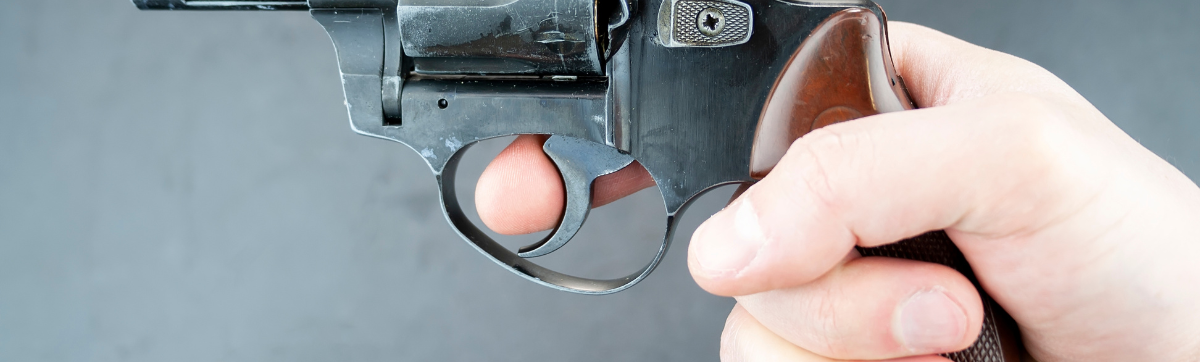
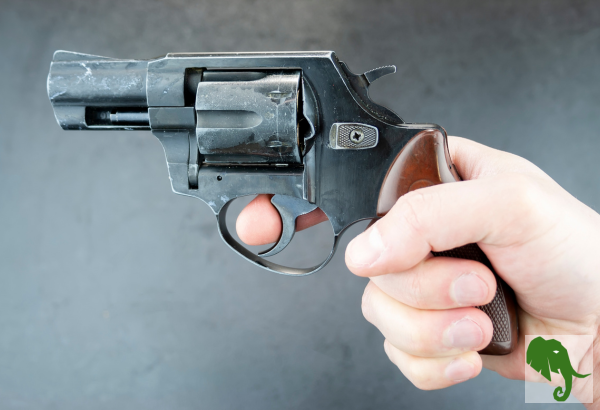
When we talk about discharges, we are talking about when a firearm goes ‘bang!’ for whatever the reason.
While they may sometimes be referred to as unintentional discharges, in actuality discharges are only classified in two ways, accidental or negligent. Intent has absolutely nothing to do with the categorization. And knowing there are only two types of discharges, we are going to talk about how most accidental discharges are actually negligent discharges.
What’s the Difference?
Accidental Discharges
An accidental discharge is generally one caused by some design flaw in or mechanical malfunction of a firearm.
An Example
You may or may not be familiar with the more recent drama surrounding a particular handgun model from a big-brand firearm manufacturer supposedly firing on its own without the trigger being pulled. This is a great example of accidental discharges or at least the potential for them. There is nothing a user could do about the issue except to continue following gun safety rules at all times, especially maintaining good muzzle discipline. That or never using the weapon again until the issue gets resolved by the manufacturer.
Negligent Discharges
By contrast, negligent discharges (or ‘ND’s as they are sometimes referred to as) are caused by some type of improper handling, not following gun safety rules, improper storage, incorrect installation of parts, the wrong parts for a given firearm being installed, shooting up into the air, or lack of sufficient training.
And the reality is? The vast majority of discharges are negligent, not accidental.
Example After Example
Pulling the trigger of a firearm to see if it’s loaded, not ensuring a firearm is unloaded before disassembling it for cleaning, not clearing clothing items out of the way while holstering, flailing about at the range with a firearm in hand and a finger still on the trigger when a hot case goes down one’s shirt, and many others are all examples of negligent discharges. Yes, these and many others have actually happened and more than once. They happen with more frequency than they should.
A buddy of mine was living about 15 minutes off of the Las Vegas strip in a nice neighborhood a number of years ago. One day a neighbor of his gets out one of their rifles, for whatever the reason, and elects to pull the trigger specifically to check if the rifle was loaded. It was. A round went through an exterior wall of their home through an exterior wall of my buddy’s house, missing his TV, crossing his living room, missing the couch, going through the door of his coat closet, and then getting lodged in the baseboard in the back of that closet. Luckily for my buddy, AND his neighbor, he was not in the room when the round passed through. That could have been bad.
I was at a gun range one day years ago; and I noticed a father and son were shooting together. They had some issue pop up with the AR-style .22 rifle they were shooting; and happened to ask me if I could fix it for them. Of course, I agreed and went over to their stall. The rifle was on the shelf (or countertop, as they are sometimes called) in their stall and pointing downrange. For whatever the reason, which to this day I still cannot tell you, when I went to pick the weapon up, I pulled the trigger; and it went ‘pow!’ I knew at that very moment I had made a mistake. I just caused a negligent discharge. Of course, it was not my intent to shoot the gun or even to test it at that particular moment; but nonetheless it happened. The good news? We were at a range and the rifle was pointing down range the entire time; but the circumstances and intent did not matter. I had made a mistake; and one I learned from.
The point is there are stories after stories of negligent dischanges, far more than any true accidental. They can happen if we are not present, actively following safety rules, and staying vigilant.
Why Does Terminology Matter?
Because being honest about what happened and calling it what it is, in this case negligent, helps us accept responsibility, holds us accountable, and hopefully causes us to up our safe handling game anytime we are handling a firearm.
Calling them an ‘accident’ is dismissive of what actually occurred and only serves to try and absolve us of what we caused to happen. “Accidental” also implies evitability of discharges, when in fact true accidental discharges (mechanical failures or similar) with modern day firearms is very rare in the overall scheme of things.
Unfortunately, negligent discharges get labeled as or clumped in with accidental. This could be due to the difference being seen as semantics or the unwillingness to accept responsibility? After all, it’s easier to blame something or someone else.
Who IS Responsible
As we have said, like it or not, the handler of a firearm is responsible for any and all negligent discharges. The handler is responsible for every round that comes out of that firearm. All firearm handlers are responsible for knowing and following gun safety rules at all times when handling any firearm.
Some may argue that without the intention of a firearm going ‘bang,’ it makes any discharge an accident. The intention behind a discharge does not determine its classification. Plus, I contend anyone, aside from those utterly ignorant of any firearm safety rules or protocols, knows when they did something they should not have; thus, they know deep down it was negligence.
Legal or Ethical Implications
Accidental discharges certainly can have legal or monetary ramifications for a manufacturer. However, when it comes to the legal or ethical ramifications of negligent discharges, they can range from general embarrassment or public shame all the way to ruined professional reputations and even lawsuits or worse.
Of course, the absolute worst would be if another person, pet, or some piece of property were hit by a negligent discharge. The consequences could be severe. Pleading the shot was ‘accidental’ or unintentional will most likely not get anyone very far.
Top 4 Gun Safety Rules
To reiterate…
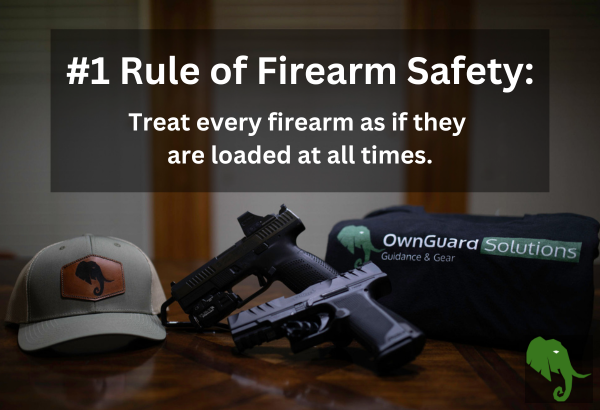
- Treat all firearms as if they are loaded at all times.
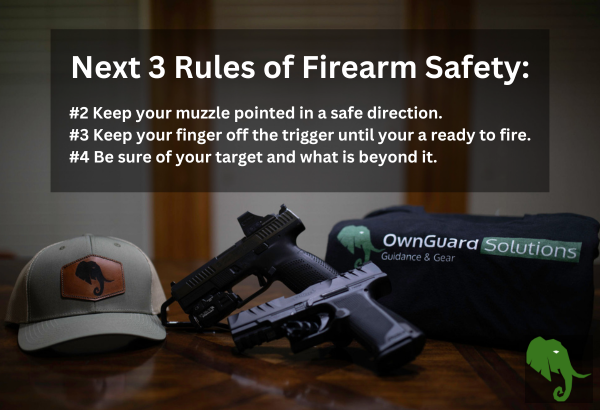
- Do not point your firearm at anything you are not willing to destroy. Be aware of your muzzle at all times. (This speaks to the muzzle discipline we mentioned earlier.)
- Keep your finger off of the trigger (and outside the trigger guard) until you are ready to shoot. (Hollywood is not the place to get your gun safety training from!)
- Be aware of your target and what is beyond (and on both sides of) it. You are responsible for every round you fire.
There are also other safety rules, but these are certainly at the top of the list. If you don’t know or don’t understand what they mean, ask someone. If you are curious or want to take your responsible gun ownership to the next level, get some basic training and learn the gun safety rules and what they all mean. Learn some safety protocols that will help keep you and those around you that much safer when you are handling firearms.
Conclusion
Guns are not inherently dangerous; but their handlers can be.
You can avoid negligent discharges by following basic gun safety, staying mindful and paying attention anytime you handle firearms. Treating a firearm as if it is loaded at all times really is the best course of action. Guns are not toys and should never be treated as such, even when we ‘know’ they are not loaded.
If you are going to handle or own a firearm, the minimum you can do is learn firearm safety and follow those rules at all times when handling one. Of course, OwnGuard Solutions recommends getting training along with keeping your firearms well maintained and safely stored. We all want to be safer and more responsible gun owners; don’t we?
Leave comments, opinions, or rebuttals in the comments below.
Related Content
Inaugural Episode: Mastering Gun Safety with Expert Insights, Part 1
Overview Season 1: Episode 1 Welcome to the first episode of the Self-Initiative Project podcast, hosted by Jim O’Brien. In this episode, we dive into the essentials…
Mastering Gun Safety with Expert Insights, Part 2
Overview Season 1: Episode 2 Finally… Jim reunites Denis in this episode to finally wrap up their discussion on gun safety. After nearly a year since…

Why You Shouldn’t Use Firearm Safeties as a Crutch
I have heard many handgun shoppers say they “want one with a safety.” When they say this, they are considering those handguns (sometimes exclusively) with…

Read other OwnGuard Solutions blog posts
Read our other posts centered around being safer and better prepared.
Classes and Training

Register for one of our upcoming, scheduled classes or request one that is not currently scheduled.