


I have heard many handgun shoppers say they “want one with a safety.” When they say this, they are considering those handguns (sometimes exclusively) with an external safety (switch). Shoppers shouldn’t put all their stock in one type of safety over another unless they truly understand the differences or they have a considerable amount of experience with one type over another. This time we talk about categories of handgun safeties and why you should not use firearm safeties as a crutch.
Many handguns today, striker-fired as an example, do not have external safeties on them. This is because many strikers have internal safety mechanisms that prevent them from being fired unintentionally. If we talk about revolvers, even fewer have an external safety. So what’s my point? My point is that unless you understand what it is you are asking for, you may miss out on some great options for yourself.
When it comes to safe handling of firearms, the handler or shooter is responsible for the safe handling of that weapon. Period. It is not some other person’s responsibility or that of some mechanical device to keep a firearm safe.
Now that we got that out of the way, let’s talk about the 2 categories of handgun safeties and what they include. Then, we will talk about some things to consider when evaluating the right handgun for you.
Types of Firearm Safeties
When it comes to handguns specifically, which we are focused on this time, there are 2 main categories of firearm safeties, passive and active.
Active/External
By contrast, active safeties are external and require a user to explicitly and positively turn them on and off. Examples of active safeties:
- Frame- or slide-mounted safeties (‘switches’ or ‘catches’).
- Decocking levers.
- Magazine disconnect.
Passive/Internal
Passive safeties are those that are internal and get disengaged when a pistol is being used. Some examples of passive safeties:
- Trigger lever.
- Firing pin block (or ‘drop safety’).
- Grip safeties.
- (Heavier) trigger pull weight.
You can research any of the handgun safety types mentioned here on your own to learn how each works. Learning more about the safety types and how they operate may help you in deciding on your next handgun purchase.
And it should go without saying; but no safety is designed to protect against negligent or reckless handling of any firearm.
When handling a firearm, keeping it pointed in a safe direction, i.e. away from people, pets, or property, and keeping your finger off and away from the trigger are still the 2 BEST firearm ‘safeties.’ When not handling them, keeping firearms locked away in a safe or similar is a great way to keep your firearms safe as well, especially if you have young children at home.
The Place for Safeties
For all those only shopping for handguns with safeties… Technically, they all have some sort of safety built in, some just rely on the shooter more than a specific type of mechanism. Each safety type has its merits and therefore situations where they might be better suited.
We know that most looking for handguns with safeties are looking for those with external safeties. An active safety could be a pretty good choice if you have small children around. However, unless you shoot or train a lot, you have got to remember to turn them off in order to shoot and back on again once you are done. This is an additional step. It can become more of an issue in self-defense scenarios. Can you remember to turn your safety off before you need to shoot? Will you remember to turn it back on again before you return it to your holster or purse?
Passive safeties allow for no additional, intentional steps needed by the shooter to fire a pistol, aside from pulling the trigger, while keeping the firearm in an overall safe state, even if it gets dropped. I contend passive safeties are better for self-defense, especially if you opt to carry, as it is one less thing to have to remember or deal with when you lose your fine motor skills under stress, etc. Admittedly passive safeties are what I am used to, because I have shot and trained a lot with handguns that utilize passive safeties.
Is one category of safeties better than the other or more or less effective? It depends. If you have children around or you just shoot targets once in a blue moon, then an external safety might be the right choice. If you have a handgun for self-defense purposes, then internal (passive) safeties might be the better choice. It also matters which you have shot the most or have trained with. Only you can decide what’s right for you.
Peace of Mind
It seems many who may not shoot very much or those new to firearms prefer handguns with an external safety of some type. Or maybe they are just not familiar with the notion of passive safeties. I get it. If you cannot see it, it must not exist; right? Or maybe they have no plans to keep it in a holster (not good), so they have genuine concerns about the trigger getting pulled unintentionally. Whatever the reason, they may not be certain and feel like they want that extra layer of perceived protection.
Why do people insist on handguns with external safeties (safety ‘switches’ or ‘catches’)? I believe one reason is that many handgun shoppers have been led to believe external safeties make the weapon safer because they can physically see whether or not a firearm is in a safe state because its safety has been engaged. Fair.
However, the main reason I believe a lot of folks are looking for pistols with external safeties is because of the perceived peace of mind the concept of an external safety switch may give them. If there is an explicit means of rendering that weapon safe, this somehow makes these firearms handlers feel safer. This is a matter of comfort … and experience or lack thereof.
There is nothing wrong with wanting peace of mind, especially when it comes to firearms; but we still have to remain realistic and recognize the limitations any safety mechanism provides.
Some Drawbacks
Remembering When The Switch is On or Off
With active (external) safeties, you have to remember they are engaged and that you need to disengage them in order to shoot. By the same token, you will want to remember to engage them again once you are finished shooting or needing to re-holster, as examples.
Will you remember under stress? Even with training, under the stress of a bad situation, you will not rise to the level of your training. You will only perform at about 60-80% of your level of proficiency in training. Are you prepared to operate that external safety? What if you don’t really shoot that often and that safety switch is still super stiff? Will you have time to fumble with it when a self-defense or home defense scenario arises?
Do you shoot or train often enough to remember to disengage a safety when and if you need to use your firearm? Maybe? Well, if you do not know, you need to be shooting more often and probably getting some training too.
Subject to Failure
A reason not to be fully reliant on safeties is that because they are mechanical devices they are subject to failures like any other mechanical device.
That external safety that you are so reliant on may fail as a means of preventing the trigger from being pulled. Are you always practicing good gun safety either way? It matters.
Safe Handling is Still Mandantory
After conducting some quick research, I was not able to find any statistics on the frequency of firearm safety failures. However, we know that any mechanical device, like firearm safeties, can fail, leading to accidental negligent discharges. Relying solely on any handgun safety for preventing accidents is risky at best.
Any sort of safety does not absolve any firearm handler from following basic gun safety rules. While we have talked about these a few times before, we provide them here again for your convenience.
Top 4 Gun Safety Rules
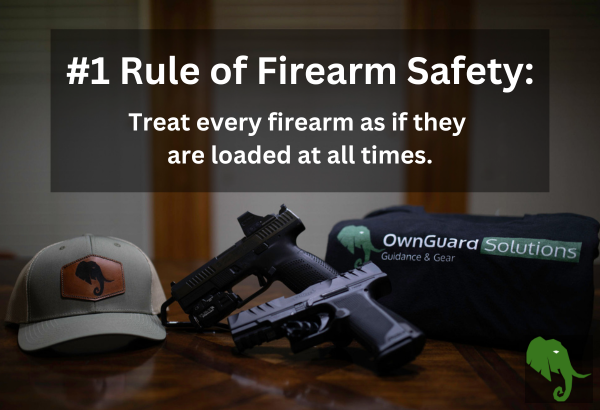
- Treat every firearm as if it is loaded at all times.
- Be aware of the muzzle’s direction and do not point your firearm at anything you are not wanting (or willing) to destroy.
- Keep your finger off of the trigger (and outside the trigger guard area) until you are ready to shoot.
- Be aware of your target as well as what is beyond (and around) it.
Depending on the sources you find, there are actually another 6-8 gun safety rules, like not using a firearm while under the influence. However, it can be argued that these top four are the most important.
Any firearm safety mechanism does not absolve you of following these gun safety rules at all times when you are handling any gun. You should consider any safety as a back-up to the primary way of keeping firearms safer – your safe handling of them.
Conclusion
You should no rely on any type of firearm safety mechanism, active or passive. Ultimately, you handling your firearms in a safe manner at all times is what keeps you, your family, your friends, your pets, your neighbors, your fellow shooters, and your property safe.
Firearm safeties can help prevent accidental discharges; but the handler of a firearm or the shooter is responsible for preventing or avoiding negligent discharges. (We will talk about negligent versus accidental discharges in a future post, so stay tuned.)
And for the record, there is nothing wrong with wanting peace of mind so long as we acknowledge the realities and plan accordingly. The planned course of action, once you have obtained a firearm, is to make it a habit to handle them safely at all times. Then, to go shoot regularly and to keep them clean along the way. These activities are not only great ways to get better with your firearms. They allow you to become more familiar with them. I encourage anyone serious about learning the ins and outs of their firearms, and their capabilities, to go get some training.
In addition to some outstanding training classes, we have a lot of other firearms-related content to share that you can find here: Gun Safety and Firearms Training and Getting Started with Firearms.
Related Content
Inaugural Episode: Mastering Gun Safety with Expert Insights, Part 1
Overview Season 1: Episode 1 Welcome to the first episode of the Self-Initiative Project podcast, hosted by Jim O’Brien. In this episode, we dive into the essentials…

Holsters Enhance Pistol Carry Safety
If you are carrying a pistol for defensive purposes, on- or off-body, that pistol generally needs to be in a holster, especially when it is …

Is Purse-Carry (Off-Body Carry) Right for You?
Recently, I was told that I should not write about a subject unless I knew about it through first-hand experience. This individual was convinced there…

Why Owning a Gun Doesn’t Make You Safer
Overview Season 4: Episode 37 We dive deep into the nuanced discussions surrounding firearms ownership and self-defense. Exploring the emotionally charged world of gun rights and gun…

Read other OwnGuard Solutions blog posts
Read our other posts centered around being safer and better prepared.
Classes and Training

Register for one of our upcoming, scheduled classes or request one that is not currently scheduled.
Keeping your finger off of the trigger (and keeping the muzzle pointed in a safe direction) are your primary, go-to firearm safeties.